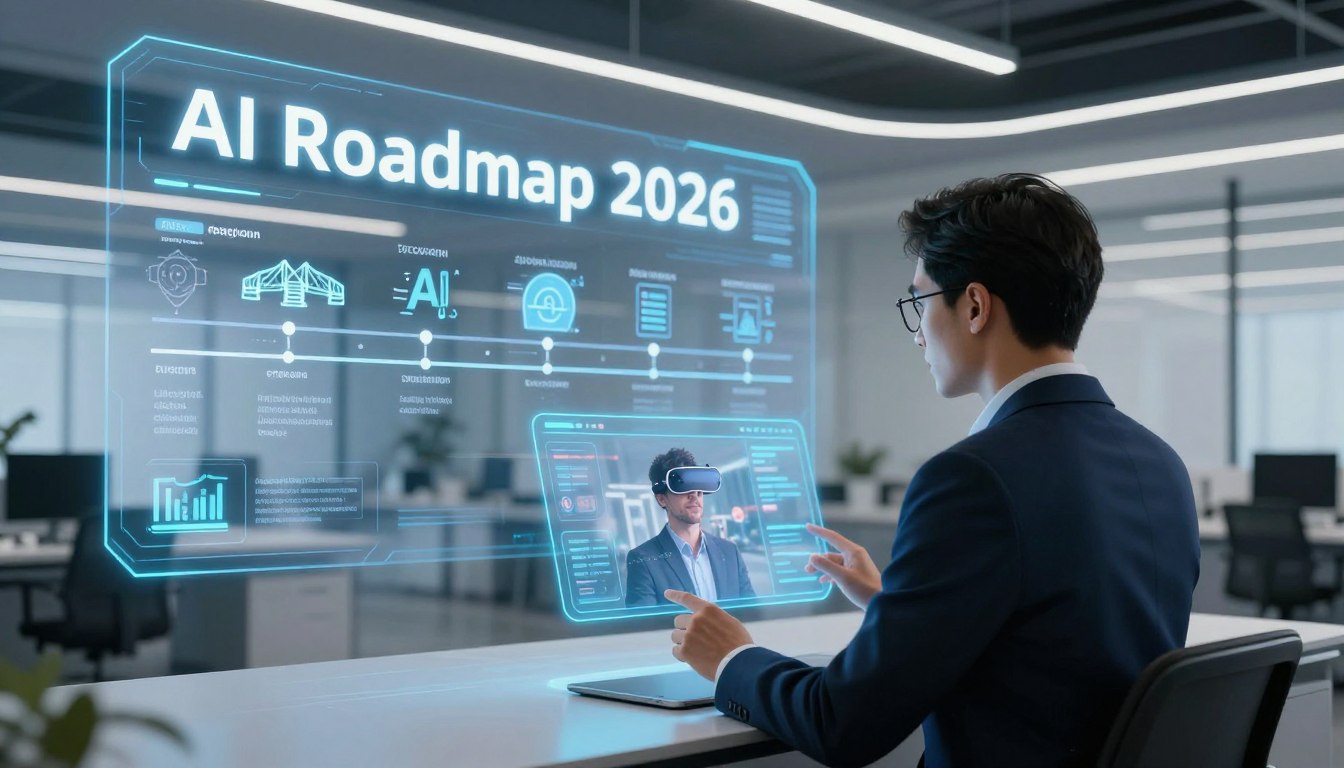
Roadmap 2026: Voice Control, Live Co-Creation & VR Bridges
Have you ever thought about how digital interactions will change when machines understand us like humans do? NVIDIA founder Jensen Huang said computing demand has grown by a million times in a few years. This huge increase in power is driving the next big leap in immersive experiences.
Our ai porn roadmap 2026 shows the big tech changes coming soon. You’ll see how advanced voice control will go beyond simple commands. It will become a natural part of your digital life. These tools will change how you interact with content by connecting virtual worlds with real-time co-creation.
As we look ahead, you’ll learn about the hardware and software needed to stay ahead. Mastering voice control is now crucial for a seamless, interactive future. This guide is your main resource for understanding this fast-changing world.
Key Takeaways
- Computing power has grown by one million times, enabling complex real-time interactions.
- Voice control is evolving into a primary interface for immersive digital environments.
- Spatial computing will soon allow for seamless live co-creation in virtual spaces.
- Hardware requirements are shifting to support high-fidelity, low-latency experiences.
- Understanding these trends is essential for users navigating the next generation of digital content.
Understanding the AI Porn Roadmap 2026
The ai porn roadmap 2026 marks a big shift in how we use generative media. It’s a plan for the industry to move from static images to agentic experiences. This means the tech will adapt to what you like, making your experience more personal and fun.
This change focuses on real-time generation. Instead of looking at the same files, you’ll interact with AI agents. They’ll make things for you right then, making every moment feel new and tailored to you.
To get the most out of these new features, you need to be ready. The ai porn roadmap 2026 says you need strong hardware and fast connections. Staying ahead means knowing these needs and making sure your setup is ready for the future.
Preparing Your Hardware for Next-Gen AI Integration
Your journey to next-gen immersion starts with preparing your hardware for AI. You need a solid base that can handle high-fidelity data smoothly. This avoids performance issues later.
Upgrading Your VR Headset Capabilities
To ensure seamless interaction, use the latest Meta XR Interaction and Meta XR Avatar SDK in Unity 3D. These tools keep your headset compatible with modern AI. Updating your software development kit improves tracking precision for better digital experiences.
Optimizing Audio Input for Voice Control
Clear communication is key for responsive AI. Choose high-quality microphones with minimal latency for accurate voice commands. This makes interactions smoother and more natural.
The table below shows the hardware you need to stay competitive with the roadmap ai porn guidelines.
| Component | Minimum Requirement | Recommended Upgrade |
|---|---|---|
| VR Headset | Standard 6DOF | High-Refresh Rate HMD |
| Audio Input | Integrated Mic | Dedicated Studio Condenser |
| SDK Integration | Basic Unity XR | Meta XR Avatar SDK |
| Processing | Mid-Range GPU | High-End RTX Series |
Setting Up Voice Control Systems
Learning to use voice-activated interfaces is key for a modern roadmap ai porn setup. By using advanced audio processing, you get a deep, natural experience. It responds quickly to what you say.
Switching to hands-free use needs strong software. High-quality input ensures your system gets commands right every time.
Configuring Natural Language Processing Modules
First, set up your Natural Language Processing (NLP) modules for complex tasks. These modules are the heart of your voice control system. They turn your words into actions for the AI.
Following standards like the SAG-AFTRA Interactive Media Agreement is crucial. It ensures your system works well without losing clarity or speed.
Establishing Voice Command Protocols
After setting up your modules, define clear voice command rules. These rules tell the AI what to do with your words.
It’s important to follow legal rules for voice generation. This keeps your digital identity safe while you enjoy a smooth roadmap ai porn experience.
Customizing Trigger Phrases for Personalization
Personalizing your voice control setup is the last step. Pick unique phrases to start certain actions or moods. It makes your experience feel just right for you.
Consistency is key when picking these phrases. Choose ones that are clear but not too common. This helps avoid mistakes while keeping things easy for you.
Mastering Live Co-Creation Tools
Using generative AI in real-time changes how we interact with virtual worlds. We move from just watching to actively creating. This change comes from mastering tools that connect our ideas to digital creations.
Connecting to Real-Time Generative Engines
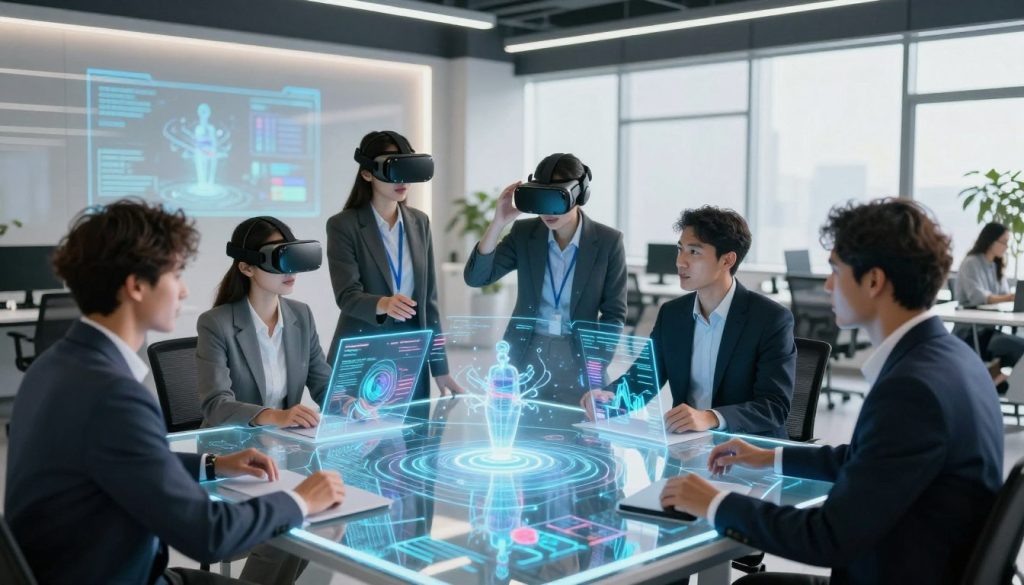
To get a true immersive AI experience, you need to link your setup to generative engines. Tools like Ubiq and Ubiq-Genie help make this connection. They let you add smart intelligence to virtual reality spaces.
Once connected, your setup sends data to the cloud. There, advanced models work on your requests. This seamless integration means the virtual world changes as you act. You don’t wait for pre-made content; it evolves with you.
Collaborating with AI Agents in Real-Time
Collaboration means working with AI agents that can reason and act in your space. These agents act as partners, understanding your actions and voice commands. This real-time interaction gives you a sense of control not seen before in digital spaces.
You can guide these agents to change textures, lighting, or character behaviors instantly. They understand context, so they can suggest creative ideas. This makes your virtual session a dynamic project where you lead.
Adjusting Creative Parameters During Sessions
To keep things flowing, adjust creative settings during sessions. Balance system performance with visual quality for a smooth experience. If the generative engines struggle, tweak the resolution or object density.
The table below shows how different settings affect your real-time interaction and immersive AI quality:
| Parameter | Low Setting | High Setting |
|---|---|---|
| AI Reasoning Speed | Faster, less detail | Slower, high complexity |
| Object Density | Minimalist, stable | Rich, high demand |
| Latency Buffer | High responsiveness | Smoother visuals |
Mastering these adjustments keeps your creative flow going. Try different settings to find the right balance between machine speed and your vision.
Building Bridges to Virtual Reality Environments
Creating a seamless bridge between your digital AI outputs and virtual reality environments is the next frontier for total immersive AI. By connecting these systems, you transform static data into dynamic, interactive experiences. These experiences feel grounded in your surroundings. This process requires careful alignment between your software agents and the virtual space you inhabit.
Syncing AI Content with VR Spatial Mapping
To achieve a sense of presence, your AI-generated assets must respect the geometry of your virtual room. VR integration relies heavily on spatial mapping to ensure that digital objects interact correctly with walls, floors, and furniture. When these elements align, your AI agents can navigate your environment with natural movement and awareness.
You should utilize advanced tracking tools to anchor your content precisely. This ensures that when you move through your virtual space, the AI-generated elements remain fixed in their intended locations. Proper calibration prevents the “floating” effect that often breaks the illusion of a shared reality.
Ensuring Low-Latency Data Transmission
Maintaining a high-speed connection is the primary challenge when dealing with real-time interaction. Any delay between your input and the AI response can disrupt your immersion. To solve this, you can look toward professional-grade simulation tools like the NVIDIA Omniverse DSX Blueprint.
This technology allows you to simulate complex AI environments in software before committing to physical or high-bandwidth hardware setups. By testing your data pipelines in a virtual factory, you can identify bottlenecks that cause lag. Optimizing your data flow ensures that your experience remains smooth, responsive, and fully synchronized with your movements.
Navigating Privacy and Security Protocols
Your digital footprint in AI-powered spaces needs a proactive approach to security and identity management. When you use VR integration, keeping your user privacy safe is crucial. Knowing the risks helps you enjoy these immersive experiences without sharing your personal info with others.
Managing Local Data Encryption
Keeping your info on your own device is the best way to protect it. Using strong data encryption keeps your interactions private, even if someone tries to intercept them. Always check that your local storage settings block cloud syncing of sensitive data.
Local encryption is like a digital safe for your files. Storing your AI profiles locally gives you control over who sees your data. This reduces the chance of data breaches during your sessions.
Securing Your Digital Identity in AI Spaces
Protecting your identity is more than just tech settings; it’s about knowing the law. Laws like California AB2013 and the NO FAKES Act protect you from AI misuse. These laws prevent your likeness and data from being used without your consent.
Think of your digital identity as a valuable asset that needs constant watch. Always check the data encryption policies of any platform you use. This ensures they meet legal standards. By staying informed, you can safely explore VR integration while keeping your user privacy safe.
| Security Feature | Primary Benefit | Implementation Level |
|---|---|---|
| Local Encryption | Prevents unauthorized access | High |
| Identity Verification | Protects against impersonation | Medium |
| Legal Compliance | Ensures regulatory rights | High |
| Session Monitoring | Detects suspicious activity | Medium |
Enhancing Immersion Through Haptic Feedback
To truly experience something, you need more than just what you see. VR integration brings a physical touch to digital worlds. This makes every action feel real.
Integrating Haptic Suits with AI Outputs
Today’s tech lets you feel digital worlds through special suits. A haptic suit connects to your system, creating a synchronized sensory environment. It reacts to your movements instantly, thanks to advanced physics engines.
NVIDIA’s tools, like the Newton physics engine, are crucial. They make AI characters seem real by allowing them to interact with you naturally. This ensures every AI action feels real.
- Make sure your suit works with current AI agents.
- Link specific suit areas to different digital actions.
- Use demo environments to test your setup.
Calibrating Sensory Response Timing
Getting the timing right is key for a believable experience. Even a small delay in haptic feedback can break the illusion. Your hardware must match the spatial mapping of your virtual world perfectly.
To get this right, focus on quick data transfer between your AI and wearable. Proper setup means sensations match visual events perfectly. This creates a deep neural feedback loop that keeps you engaged.
Consistency is key in fine-tuning these settings. Regular updates keep your setup seamless. This dedication ensures the most immersive experience in your digital space.
Troubleshooting Common Connection Issues
Even the most advanced digital worlds can have technical problems. These issues can make your experience less smooth. Companies like Insomniac Games say that if the performance feels off, people might stop using it right away.
By setting up immediate feedback loops, you can spot and fix these problems quickly. This way, you can enjoy your experience without interruptions.
Resolving Voice Recognition Latency
Good voice control needs fast processing of voice commands. If you see a delay, start by checking your local buffer. Cloud issues can cause slow responses, so using local processing can help a lot.
Make sure your microphone is clear and quiet. Clear audio signals help the software understand you better. Keeping your voice commands safe and fast is key to a great experience.
Fixing VR Sync Discrepancies
For smooth real-time interaction, your movements and the virtual world must match perfectly. If you see sync issues, it might be because of data rate problems. Check that your spatial mapping software is up to date to avoid issues.
If your actions don’t match the visuals, try lowering the resolution of background items. This frees up resources for the main real-time interaction engine. Keeping your setup in check ensures a seamless and engaging experience every time.
Scaling Your Experience with Future Features
Scaling your setup is more than just adding new hardware. It’s about planning for future features. As digital interactions change, you need to get ready for systems that are smarter and quicker. This way, your setup will be ready for the next big leap in computing.
Exploring Advanced Neural Feedback Loops
Neural feedback is a big step in how we interact with virtual spaces. It tracks your body’s reactions to make the experience more real and engaging. This creates a natural feel between you and the virtual world.
This tech lets generative engines change content based on your mood and focus. Your digital experiences will become more tailored as the system learns what you like. It’s a smooth connection between your body and the virtual world.
Utilizing Predictive Behavioral Modeling
To really get advanced, you need predictive modeling. This lets AI agents guess what you need before you ask. The NVIDIA Vera Rubin, with its seven chips and five rack systems, is built for this kind of agentic AI.
With such powerful tech, your system can guess your next action. This cuts down on delays and makes your interactions smoother. Here’s a look at how setups change from basic to advanced.
| Feature Category | Standard Setup | Advanced Predictive Setup |
|---|---|---|
| AI Responsiveness | Reactive | Proactive |
| Data Processing | Local CPU/GPU | Rack-Scale Agentic AI |
| User Interaction | Manual Input | Neural/Predictive Sync |
| System Growth | Static Upgrades | Scalable Neural Loops |
Ethical Considerations in AI-Driven Content
AI is now a big part of digital entertainment, making it crucial to follow ethical standards. The use of generative AI in games has grown from 1% in 2024 to a predicted 20% by 2025. This fast growth means you need to watch how these technologies affect your experience.
Maintaining Consent Frameworks
Respect in digital spaces starts with informed consent. You should know when and how AI models affect your interactions. Developers should offer clear options to turn AI features on or off anytime.
True agency means you decide on automated experiences. By pushing for strong consent frameworks, your choices lead your virtual path. This builds a better relationship between you and the software.
Understanding Data Usage Policies
When using complex AI engines, AI safety is key. Always check the terms of service to see how your data is handled. A good service will keep your data private by making it anonymous before it goes to the cloud.
Also, look for services that use end-to-end data encryption to keep your info safe. When your data is secure, you can dive into immersive worlds with more confidence. Remember, your digital identity is precious and needs proactive protection in AI spaces.
Optimizing Your Workflow for Maximum Satisfaction
Getting fully immersed in digital experiences needs more than just the right tools. It’s about how you set up your digital space. Streamlining your interactions lets you dive deep into your virtual world without distractions.
Creating Personalized AI Profiles
Your AI should match your personal style and habits. Customized profiles let the system know what you like and adjust settings for you. This makes your digital world feel like home right away.
Save your favorite settings and how you interact in these profiles. The system learns your habits and offers a tailored experience that grows with you. This saves time and keeps your focus on what’s important.
Automating Routine Setup Procedures
Being efficient is crucial for a top-notch digital experience. Use frameworks like the Game Playbook to link your goals with system features. This ensures your routine tasks run smoothly without you having to do anything.
Automating your startup lets you explore future features more easily. Advanced predictive modeling suggests improvements based on your past use. Plus, sync these with your haptic feedback for the perfect sensory experience.
Conclusion
The world of digital interaction is changing fast as we get closer to 2026. You now know how to handle complex tech setups and advanced software. This guide helps you use voice control, live co-creation, and VR in your daily life.
How well you adapt to new tech affects your digital experiences. Keeping your data safe and following ethical standards is key. Companies like Meta and NVIDIA offer tools to help you learn more.
Keep being curious as new tech updates come out. Learning these systems keeps you ahead in innovation. Use these platforms to make our virtual world more connected and interactive. The journey to advanced AI is yours to explore.
FAQ
What are the key milestones in the roadmap ai porn for 2026?
The 2026 roadmap focuses on voice control, spatial computing, and live co-creation. Key milestones include the integration of the NVIDIA Vera Rubin platform and the widespread adoption of the Meta XR Avatar SDK for more realistic character interactions.
Which future features should I prepare my hardware for today?
You should focus on hardware that supports advanced neural feedback loops and predictive behavioral modeling. Upgrading to high-fidelity audio input and VR headsets compatible with the NVIDIA Omniverse DSX Blueprint will ensure you are ready for these future features.
How does the NO FAKES Act protect my digital identity in AI spaces?
The federal NO FAKES Act is designed to protect individuals from unauthorized AI-generated depictions of their voice and likeness. In the context of the roadmap ai porn, this means you have greater legal standing to control how your digital identity is used or replicated in virtual environments.
What is the role of the NVIDIA Vera Rubin platform in the 2026 roadmap?
The NVIDIA Vera Rubin platform provides the massive computational power required for the next generation of autonomous AI agents. It enables more complex reasoning and faster real-time generative responses, which are essential for the high-fidelity experiences outlined in the roadmap ai porn.
How can I resolve latency issues with voice control and AI responses?
To minimize latency, ensure your NLP modules are running on optimized local hardware and check for compatibility with the SAG-AFTRA Interactive Media Agreement standards. Additionally, using high-bandwidth connections for real-time generative engines like Ubiq-Genie can significantly reduce response times.
Why is the Meta XR Interaction SDK important for AI integration?
The Meta XR Interaction SDK provides the necessary framework for the AI to track your physical movements and gestures accurately. This data is vital for the AI to react realistically to your presence, which is a core requirement for the immersive features in the roadmap ai porn.