
Scenario Builder: Layering Setting, Action & Dialogue Tags
Ever wondered why some stories grab you while others don’t? It often comes down to how scenes are built. To excel in the ai porn scenario builder, you need to do more than just give simple prompts.
By carefully adding setting, character actions, and dialogue tags, you can craft top-notch stories. This method turns simple ideas into deeply immersive experiences. Your audience will be hooked from the very beginning.
Improving your creative process is crucial for creating high-quality content. Using the ai porn scenario builder right lets you control the pace and emotions of every scene. Let’s dive into how to boost your storytelling with these key techniques.
Key Takeaways
- Master the art of layering environmental details to ground your scenes.
- Use specific action tags to show character intent rather than just telling.
- Balance dialogue with descriptive beats to maintain a natural flow.
- Transform basic prompts into complex, multi-layered narrative arcs.
- Improve reader engagement by focusing on sensory details and pacing.
Understanding the Mechanics of an AI Porn Scenario Builder
Every high-quality scene starts with knowing how an ai porn scenario builder works. These systems take your instructions to create a story. By understanding how they work, you can get better results.
Defining the Role of Tags in AI Generation
Tags are key to talking to the model. They help the AI understand what’s happening in your story. Dialogue tags, or cues, are especially important for knowing who’s speaking.
Without the right tags, your story can get mixed up. Consistent tagging keeps your story clear and engaging.
How Context Windows Influence Tag Priority
The context window is how much info the AI can handle at once. When using an ai porn scenario builder, the AI focuses on the latest or most important info. If your prompt is too long, it might forget earlier details.
Put your most important instructions first. This way, the AI stays focused on your scene. It keeps your desired outcome in mind throughout.
Balancing Descriptive Depth with Token Efficiency
Every word you use takes up tokens, which are the AI’s processing units. While you want your scenes to be detailed, too many words can slow things down. A good ai porn scenario builder balances vivid descriptions with clear instructions.
Use powerful verbs and specific nouns to paint your picture. This way, you get more out of your tokens. Quality over quantity is key for great prompts.
Establishing the Foundation with Setting Tags
Your story starts with the setting where characters meet. Using a scenario builder nsfw tool, the setting is key for the AI. A clear setting keeps the story grounded and logical.
Selecting Sensory Details for Immersive Environments
To make your story feel real, add sensory details. Think about the feel of furniture, the smell of rain, or city sounds. These details help the AI create a vivid scene.
By adding these sensory details, your scenario builder nsfw scenes come to life. Focus on what characters feel and see right away.
Using Atmospheric Modifiers to Set the Mood
Atmospheric modifiers change a scene’s mood without adding extra words. Use words like oppressive, intimate, or electric to set the mood. These words guide the AI’s interpretation of the scene.
Choosing the right modifiers keeps your scenario builder nsfw consistent. Pick one word that captures the mood instead of a long description. This makes your story feel more focused.
Managing Spatial Constraints in Your Scenario
Characters need to know where they are to act naturally. Define the room’s boundaries and where important objects are. This stops the AI from putting characters in odd places.
Setting these limits helps your scenario builder nsfw story flow better. A clear space makes characters feel more real. It also makes your story more engaging.
Crafting Dynamic Action Tags for Character Movement
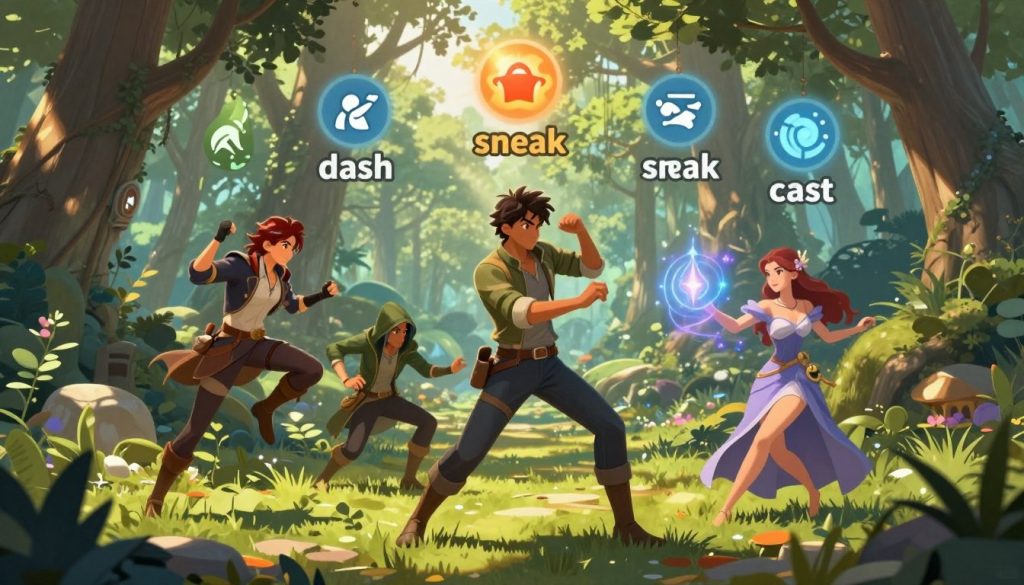
Action beats are like the choreography that makes your digital characters come alive. When you decide how a character moves, you set the scene’s rhythm. Using multi-tag tips makes every movement seem planned, not random.
Writing Verbs That Drive Narrative Momentum
To keep your story moving, choose active verbs over passive descriptions. Instead of saying a character is standing, use tags that show movement or intent. Verbs like “lunges,” “pivots,” or “reaches” tell the AI to create a specific action.
Strong verbs make your story urgent and keep readers hooked. With these multi-tag tips, you guide the AI to keep the story moving. This stops the story from getting stuck in a loop of just watching.
Integrating Physicality into Character Interactions
Physicality connects a flat description to a real experience. Focus on the weight, texture, and resistance of interactions to make them real. Describe how characters lean into each other or how their hands grip surfaces during intense moments.
Adding sensory details and movement makes the scene feel real. This helps the AI understand the space between characters. Using these multi-tag tips makes your scene feel real and emotionally deep.
Avoiding Repetitive Motion Patterns
AI models can get stuck if instructions are too narrow or repetitive. To avoid this, mix up your sentence structure and introduce new variables. If a character has been walking, change the action to something different, like climbing or kneeling.
The following table shows how to improve your phrasing for better narrative flow:
| Weak Action Tag | Strong Action Tag | Narrative Impact |
|---|---|---|
| He walks over. | He strides purposefully. | Adds intent and confidence. |
| She touches his arm. | She traces his forearm. | Increases intimacy and detail. |
| They look at each other. | They lock eyes intensely. | Builds immediate tension. |
| He moves away. | He retreats cautiously. | Establishes character mood. |
Keeping your verbs and physical interactions varied is key to success. By doing this, you prevent the AI from repeating the same actions. These multi-tag tips help keep your narrative fresh and engaging throughout your project.
Mastering Dialogue Tags for Authentic Character Voices
Dialogue is key to connecting your reader with a character’s inner world. When writing for AI, how a character speaks reveals their personality more than looks. Using multi-tag tips ensures every line is meaningful and real.
Refining Speech Patterns and Tone
To keep readers immersed, avoid impossible dialogue tags. Characters can’t smile, snort, or smirk their words. These are facial expressions, not vocal actions. Instead, focus on the rhythm and vocabulary that define your character’s unique voice.
- Use specific verbs like “whispered,” “bellowed,” or “muttered” to convey volume.
- Incorporate regional dialects or specific slang to establish background.
- Keep sentence structures consistent with the character’s education and social status.
Using Dialogue to Reveal Character Intent
Great dialogue rarely states the obvious. Instead, it hides the character’s true motivations behind subtext and hidden agendas. By layering intent with multi-tag tips, you make the reader dig deeper into what’s being said.
Think about how a character might deflect a question to hide their guilt. A nervous action tag with a dismissive dialogue line creates a complex interaction. This makes your characters feel real, not just scripts.
Balancing Spoken Words with Internal Monologue
The most compelling scenes blend what a character says with what they think. Internal monologue adds emotional context that spoken words often lack. Aim to weave these thoughts into the narrative without overwhelming the dialogue.
Try alternating between spoken lines and brief internal reflections to keep a steady pace. This balance shows the character’s true feelings while keeping the conversation moving. Using these multi-tag tips will help you create scenes that deeply resonate with your audience.
The Art of Layering Tags for Maximum Impact
Learning to stack instructions is key to making digital stories come alive. When using a scenario builder nsfw tool, how you arrange tags affects the story’s quality. By carefully layering tags, you control the story’s pace and emotional depth.
Sequencing Tags to Build Narrative Tension
To keep the story flowing, organize your tags into a clear structure. Use action beats to split long dialogues into smaller parts. This makes the story feel more natural and keeps readers interested.
Strategic sequencing helps avoid a rushed or broken story. Place intense action tags after dialogue to smoothly switch between scenes. This makes your story feel like a movie.
Creating Synergy Between Setting and Character Action
Your setting should be more than just a backdrop. It should be an active participant in your story. By mixing setting tags with character actions, the AI gets how the setting affects the scene.
For instance, describe a small room and then have a character move in it. This connection makes your scenario builder nsfw story feel real and detailed. Every action should make sense in the world you’ve created.
Troubleshooting Tag Conflicts and AI Hallucinations
Even with great prompts, you might run into problems. These hallucinations happen when the AI gets mixed signals. Check your tags for any that might confuse the AI and remove them.
If the AI ignores a setting, try putting that tag first. Consistency is crucial in fixing these issues. By sorting out conflicting tags, you keep your story flowing well and of high quality.
Advanced Techniques for Multi-Tag NSFW Scenarios
By using multi-tag tips, you can make static scenes come alive. This is especially true when you go beyond simple setups. It unlocks the full potential of a top-notch scenario builder nsfw.
With these advanced methods, every part of your story has a purpose. This makes your creative vision shine through.

Implementing Complex Multi-Tag Tips for Depth
To really draw your audience in, layer your tags. This adds nuanced character motivations and rich environments. Instead of just using single words, mix sensory details with emotions.
This creates a world that feels real and reacts to your characters. It’s a multi-dimensional space that brings your story to life.
“The secret to a compelling narrative lies in the harmony between the environment and the internal state of the characters.”
Try mixing environmental tags with character traits to craft a unified scene. This gives the AI a clear guide on how the setting should affect the story. It avoids generic scenes and keeps your vision at the forefront.
Managing Pacing Through Strategic Tag Placement
Keeping your story’s rhythm is key to keeping your audience engaged. Use action beats to control the flow of dialogue, including deliberate pauses and hesitations. Place these beats wisely to control the scene’s pace.
- Short, punchy action tags speed up intense moments.
- Long, descriptive tags slow down the story and build suspense.
- Internal monologue tags add depth during quiet moments.
Utilizing Conditional Logic in Your Scenario Builder
Conditional logic is the heart of dynamic storytelling. It lets the scenario builder nsfw respond to your character’s choices. This makes the story feel interactive and real.
You can set rules for how actions change the environment or dialogue. This advanced approach keeps your story consistent as it evolves. Learning these multi-tag tips gives you full control over your complex projects.
Refining Your Workflow with the AI Porn Scenario Builder
Building a professional workflow is key to unlocking your digital storytelling’s full potential. When you approach your creative process with intentionality and structure, you move beyond simple trial and error. Using an ai porn scenario builder effectively means treating every session as a chance to improve your skills.
Iterative Testing and Prompt Adjustment
The most successful creators know the first output is rarely the final version. View your prompts as living documents that evolve through constant testing. If the AI produces a result that feels off, analyze which specific tag caused the deviation.
Adjust your instructions by adding or removing modifiers to see how the model reacts. Small, incremental changes often yield the most significant improvements in narrative quality. By isolating variables, you gain a deeper understanding of how your ai porn scenario builder interprets complex commands.
Documenting Successful Tag Combinations
Keeping a record of what works is essential for long-term success. You might consider maintaining a digital log or a personal database of your most effective tag strings. This practice allows you to replicate high-quality results without having to reinvent the wheel every time you start a new project.
When you find a combination that creates a perfect atmosphere or character dynamic, save it immediately. Consistency is the hallmark of a skilled writer, and documentation ensures that your style remains recognizable across different sessions.
Adapting Your Style for Different AI Models
Not every model processes language in the same way. You must remain flexible, as the strengths of one ai porn scenario builder might differ from another. Some models prioritize descriptive prose, while others excel at maintaining strict logical constraints.
Observe how your chosen model handles specific syntax and adjust your writing style accordingly. Avoid using complex phonetic spellings for accents, as these often confuse the AI and degrade the output quality. Focus on clear, concise language to ensure the model understands your intent perfectly.
| Workflow Stage | Primary Goal | Key Action |
|---|---|---|
| Initial Drafting | Concept Generation | Input core tags |
| Iterative Testing | Refining Output | Adjust prompt modifiers |
| Documentation | Knowledge Retention | Save successful strings |
| Model Adaptation | Optimization | Tailor syntax to model |
Common Pitfalls and How to Avoid Them
Even the most experienced creators face challenges with AI-generated stories. The quality of the input you give is key. Spotting these issues early helps you keep your creative vision intact.
Overloading the AI with Conflicting Instructions
One common mistake is giving the AI too many conflicting commands. Too many complex rules can confuse the AI, leading to confusing or nonsensical output. Keep your instructions simple and focused.
Also, avoid using too many repetitive words like “Ahhh” or “Ugh” in your prompts. These can be tiring for readers and clutter the story. Simplicity is your best ally when guiding the AI.
“The secret of all victory lies in the organization of the non-obvious.”
Neglecting the Importance of Character Consistency
Keeping a character consistent is crucial for keeping readers interested. If a character’s tone or motivations change without reason, readers will lose interest. Make sure the character’s core traits stay the same in every interaction.
Anchor your character’s voice by referencing their background or speech patterns in your prompts. Consistency builds trust between the reader and the story. When the AI knows the character’s limits, it produces more authentic results.
Fixing Broken Narrative Flow in Long-Form Scenarios
Long-form stories can lose momentum as they grow. If the story starts to drift, it’s time to step in with a summary or a new prompt. Re-establishing the scene helps the AI refocus on the main plot points.
Use a “recap” technique to remind the model of the current situation. By stating the goals and emotional state of characters, you can fix a broken narrative. Strategic adjustments are key to keeping your story on track.
Conclusion
Learning to layer setting, action, and dialogue tags is key to unlocking your scenario builder’s full potential. You now have the tools to turn simple prompts into deep, engaging stories.
Using sensory details, active verbs, and natural speech makes your stories come alive. These elements keep your audience hooked from start to finish.
Success comes from trying out different AI models like Claude or GPT-4. Keep track of your best tag combinations to make your creative process smoother over time.
Testing your approach over and over is the best way to get top-notch results. Adjust your strategy based on the feedback you get to improve your storytelling.
Apply these tips to your next project for better narrative flow. With each session, you’ll get better at crafting complex, emotionally rich scenarios.
FAQ
How does an ai porn scenario builder prioritize the different instructions I provide in a prompt?
The AI uses your input based on its short-term memory. To keep the AI focused, put your most important tags first. This helps it remember your main story goals.
What are some multi-tag tips for creating more realistic character movement?
Use action tags with strong verbs to make characters seem alive. This approach makes scenes feel real and avoids repetitive actions. It helps prevent the AI from getting stuck.
How can I balance descriptive depth with token efficiency in my scenarios?
Focus on key sensory details to improve your results. Use mood-changing tags instead of long descriptions. This way, you can create a rich environment without using too many tokens.
Why is it important to avoid "impossible" dialogue tags like "smirking" words?
Realistic dialogue is key. Avoid tags that show impossible actions while speaking. Instead, focus on speech patterns and tone to show what characters really mean.
How do I effectively layer tags to build narrative tension?
Layering tags is an advanced skill. It helps create a clear story structure. By carefully placing tags, you can control the pace and create a dynamic story.
What should I do if my ai porn scenario builder generates nonsensical or conflicting output?
Broken narrative flow often comes from too many conflicting instructions. Use a professional workflow to test and refine your prompts. This helps keep your story consistent and engaging.
How can I use conditional logic to improve my scenario builder nsfw experience?
Conditional logic makes your story more interactive. Set up “if-then” parameters to guide the AI’s responses. This adds depth and consistency to your nsfw scenarios.