Ascend to Reality: Stream vs Download Workflows for 4K Scenes
Have you ever thought if your high-end display is really showing off 4K content? Today, broadcasting isn’t just about sending one feed to one place. Viewers want uncompromising visual fidelity on many platforms and devices.
This change makes our production workflows more complex. Many fans believe the ascend to reality download method is the best way to keep images sharp. By using local files instead of compressed streams, every pixel stays clear and bright.
It’s key to understand these changes for your setup. Whether you prefer quick access or the superior quality of offline files, your choice affects your viewing. Let’s dive into how these workflows change your 4K media experience.
Key Takeaways
- Modern broadcasting has evolved into a multi-platform ecosystem.
- Viewers now demand high-fidelity 4K content regardless of the device.
- Streaming often involves compression that can impact visual clarity.
- The ascend to reality download approach preserves original file quality.
- Choosing the right workflow depends on your specific hardware and viewing habits.
Understanding the Technical Demands of 4K Media
Starting your 4K journey means learning about the tech needed for high-fidelity playback. It’s not just about a clear screen. You need a strong system that can handle big data without pause.
Working with 4K files means your system must handle millions of pixels per frame. This is a big challenge for old hardware. If you’re not ready, it can quickly become too much.
Bandwidth Requirements for High-Fidelity Playback
Your network needs to be fast enough to keep up with 4K’s high bitrate. If your internet speed goes up and down, you might see buffering or poor video quality.
“The secret to a smooth 4K experience lies in the stability of your data pipeline, not just the raw speed of your internet connection.”
Here are key things to think about for your network:
- Consistent Throughput: Make sure your connection can handle at least 25 Mbps for compressed streaming.
- Latency Management: Keep latency low to avoid stuttering that can ruin the experience.
- Data Overhead: Remember to account for other apps that might use your bandwidth.
Hardware Acceleration and GPU Decoding
Your CPU can’t handle 4K video decoding alone. That’s where hardware acceleration comes in.
By letting your GPU do the decoding, your CPU can focus on other tasks. This keeps your system fast and responsive while watching.
Today’s graphics cards are made for handling complex codecs like HEVC or AV1. Using dedicated hardware decoding is the best way to get high-fidelity playback. When your GPU does the work, you can enjoy 4K media just as the creators meant it.
Evaluating the Streaming Experience for High-Resolution Content
Many think that today’s fast internet means 4k resolution streaming is perfect. But, the truth is more complicated. The tech often can’t keep up with the quality of the original content.
Latency and Buffering Challenges in 4K
Streaming high-quality media online is a tricky task. Even with advanced tech, like Multi-Destination Distribution, there’s always a chance of latency. This can ruin your viewing experience.
Streaming big files needs a lot of network power. If your internet is unstable, you’ll see buffering or dropped frames. These problems can mess up the quality of your 4k resolution content.
“The true test of a digital medium is not just its accessibility, but its ability to preserve the director’s intent without the interference of network instability.”
Compression Artifacts and Bitrate Limitations
Big platforms use strong compression to save bandwidth. This makes videos look good but can cause visible issues.
These problems might show up as blocky textures or lost details in fast scenes. The streaming model focuses on quick delivery over perfect visuals. Local files are still the best way to avoid these problems.
- Bitrate caps often force a reduction in color depth and sharpness.
- Dynamic scenes suffer most from aggressive data thinning.
- Local playback remains the only way to bypass these network-dependent quality bottlenecks.
The Case for Local Storage: Why You Should Ascend to Reality Download
An ascend to reality download changes how you watch your favorite 4K shows. You move your media to your own device, avoiding online service issues. This lets you control your collection fully.
Preserving Visual Integrity Without Compression
Streaming services often compress videos to save bandwidth. This can lose the details of 4K footage. Keeping files on local storage lets you keep the original visual fidelity of your media.
High-bitrate files offer a sharper image than streaming apps. By storing these files locally, your display gets the full data it was made for. This is the only way to see the true depth and clarity of modern media.
Offline Accessibility and Playback Reliability
Streaming risks losing content due to licensing changes. A personal library keeps your media permanently accessible, no matter what. You can watch your favorite scenes anytime, without needing the internet.
Playback reliability is another big plus. You won’t face buffering or resolution drops from network issues. Using local storage ensures your media is always ready for high-quality playback.
Leveraging 4K Download AI Tools for Enhanced Quality
Revive your old video collection with advanced technology. Today’s displays need sharp details, but many old files don’t have them. 4k download ai tools help make these files look better.
How AI Upscaling Transforms Source Material
Upscaling uses smart algorithms to improve your video. It doesn’t just stretch pixels. It fills in missing details for a clearer picture.
Tools like LiveU Ingest make this process faster. They help publish clips quickly and support live transcription. This keeps your high-quality videos organized.
Selecting Reliable Software for 4K Download AI Processing
Picking the right software is key for good results. Look for tools with strong codec support and fast processing. A good 4k download ai tool fits well with your current setup.
When looking at software, check its performance. Make sure it meets your upscaling needs:
| Feature | Entry-Level Tools | Professional AI Suites |
|---|---|---|
| Processing Speed | Slow | High-Performance |
| Detail Reconstruction | Basic | Advanced Neural Networks |
| Format Compatibility | Limited | Extensive |
| Batch Processing | Unavailable | Fully Automated |
The goal is to keep your videos looking great while making them sharper. Choose software that balances speed and quality. This way, your collection stays valuable over time.
Navigating the Nuances of Streaming NSFW Content
Your online habits are personal, and keeping them private is key when streaming nsfw content. Keeping your data and viewing history safe from others is crucial. By taking a few steps, you can keep your digital trail small while enjoying your favorite shows.
Privacy Considerations and Secure Connections
A secure viewing experience starts with a secure connection. Always use encrypted connections, like a good VPN, to hide your activity. This stops others from seeing what you’re doing online.
Also, watch your browser settings. Turn off third-party cookies and use private browsing. This stops trackers from following you. Make sure your connection is secure before you start.
Managing Content Delivery Networks for Sensitive Media
Choosing the right platform for streaming nsfw content is important for your safety. Some sites use Content Delivery Networks (CDNs) that might not keep your data private. Be careful about where you stream.
Find platforms that promise to protect your data. A good service will tell you how they handle sensitive content. They should also say if they share data with advertisers. By picking secure platforms, you can enjoy your shows without worry.
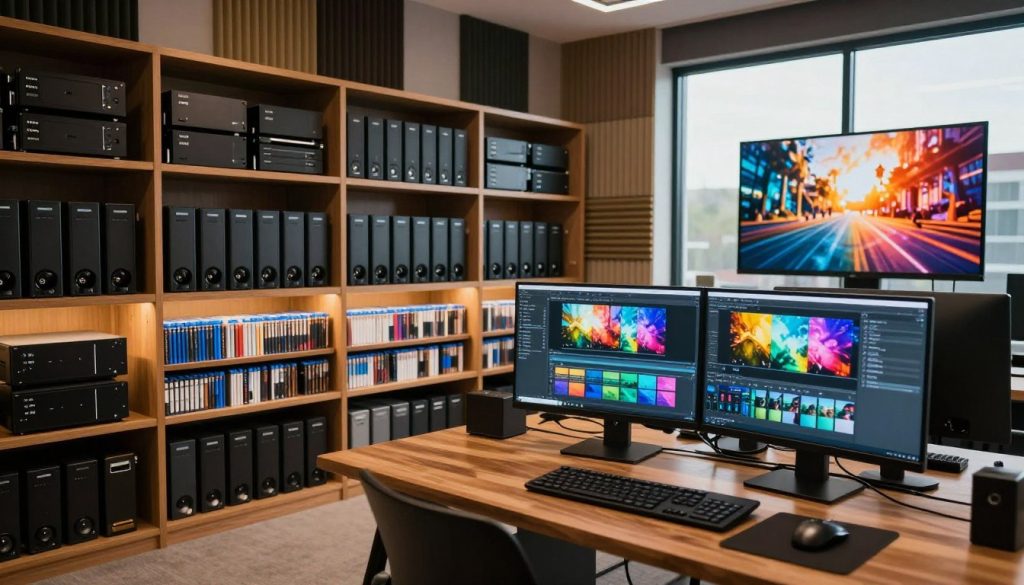
Step-by-Step Guide to Setting Up a Local 4K Media Library
Creating your own 4K media library can change how you watch movies and TV shows. It’s not just about having more space. You need a plan that focuses on speed and reliability. This way, your collection stays easy to access as it grows.
Choosing the Right Storage Hardware
When picking your storage hardware, look for drives that handle data fast. Regular hard drives work for watching, but NAS-grade drives are better for 4K files. Reliability is key for smooth playback.
For the best experience, use a solid-state drive for your most-watched content. SSDs are fast and quiet. Make sure your setup can cool well to avoid damage from heat.
Organizing Your Media for Seamless Access
Good organization is crucial for a great media library. Use a clear folder system by genre, resolution, or date. This makes your server find files quickly.
Use the same names for all files to avoid mix-ups. Adding tags helps sort and filter your collection. A clean, scalable file system keeps your network fast for 4K entertainment.
Optimizing Your Network for High-Bitrate Streaming
Your home network is key to how data moves between devices. Good network optimization means your hardware and software work well together. This ensures a smooth viewing experience.
Configuring Local Area Networks for 4K Traffic
To keep playback smooth, make sure media traffic gets priority in your network. Tools like LiveU Schedule help manage data flow in your setup.
Set up your router to use Quality of Service (QoS) settings. This means giving your media server or playback device higher priority. Doing this reduces the risk of packet loss during busy times. Your high-bitrate streams stay stable, even when other devices are using the network.
The Role of Ethernet Versus Wi-Fi 6
Choosing the right connection method is crucial for 4K content. While wireless tech has gotten better, Ethernet is still the gold standard for reliability and speed.
Ethernet gives your data a direct path, avoiding the interference found in crowded wireless areas. If you must use wireless, Wi-Fi 6 is a big improvement. It handles more data and connections better. But for the most demanding high-bitrate files, a wired connection is best for uninterrupted performance.
Good network optimization means matching your hardware to your environment. By picking the right connection and managing traffic, you build a strong base for all your high-resolution media.
Comparing File Formats and Codecs for 4K Scenes
Your choice of video compression technology affects how your 4K media looks and performs. It’s key to pick the right file formats and codecs. This balance is crucial for both saving space and maintaining high visual quality in 4K content.
Knowing these technical standards helps keep your digital library efficient and easy to access. Making smart choices now can prevent future compatibility issues.
HEVC Versus AV1 Efficiency
High Efficiency Video Coding, or HEVC (H.265), is the top choice for 4K streaming and storage. It compresses videos well, letting you store high-quality scenes without using too much space.
But, AV1 is gaining ground as a strong competitor in codecs. AV1 beats HEVC in compression efficiency, often giving the same quality at a lower bitrate.
AV1 is more efficient but needs more processing power for encoding and decoding. Make sure your hardware can handle AV1 decoding before switching to it for your whole library.
Container Compatibility Across Devices
The container wraps your video, audio, and subtitles. Picking the right file formats for containers is crucial for smooth playback on various devices.
- MP4: Works on almost all modern devices and web browsers.
- MKV: Flexible, supports multiple audio tracks and advanced subtitles.
For universal playback, MP4 is usually the best choice for 4K files. MKV is top for those needing extra features and metadata support in local media collections.
Always test a small sample of your files on your main playback devices before converting your whole collection. This ensures your 4K scenes will look stunning and seamless every time you play them.
Security Best Practices for Downloading High-Resolution Files
Building a massive 4K library is more than just about storage. It’s about keeping your digital security strong. As you grow your collection, stay alert to protect your system from threats. Good habits during data transfers keep your media space clean and efficient.

Identifying Safe Sources and Avoiding Malware
Start by choosing safe places to get your media. Always go for trusted platforms known for verified content. Steer clear of suspicious pop-ups or links that offer free high-resolution files, as they often spread malware.
Always scan downloaded files with antivirus software before opening them. This simple step gives you peace of mind and stops harmful scripts from harming your devices. Never skip these scans, even if the source seems safe or familiar.
Using VPNs and Firewalls During Data Transfers
Large data transfers make your network activity visible to unwanted eyes. A Virtual Private Network (VPN) hides your identity and encrypts your traffic. This is crucial for anyone handling sensitive media.
Also, make sure your firewall is set up right to watch incoming and outgoing connections. A strong firewall blocks unauthorized access to your network while you download. Using both VPNs and firewalls creates a secure space for enjoying your high-resolution content safely.
Troubleshooting Common Playback Issues
Even the most advanced systems can face problems with high-resolution media. If your 4K playback isn’t smooth, troubleshooting is key. It helps keep your system running at its best.
Resolving Stuttering and Frame Drops
Stuttering happens when your CPU or GPU can’t handle 4K files’ high bitrate. First, check your Task Manager. See if other apps are using too much power during playback.
Close any apps you don’t need. This frees up memory for better video playback. If problems continue, try adjusting your media player’s hardware settings. This helps spread out the processing work.
“Technology is best when it brings people together, but it requires constant maintenance to stay truly seamless.”
Updating Drivers and Media Player Software
Old drivers can cause visual and audio problems. Make sure your GPU drivers are up to date. Manufacturers often release updates to improve 4K playback.
Also, check that your media player software is current. Players like VLC or MPC-HC get updates to fix issues with new codecs. Regular troubleshooting keeps your 4K collection playing smoothly.
Conclusion
Your journey to the perfect viewing experience is about finding the right mix of ease and technical detail. You now know how to build a library that meets your high standards for visuals.
Choosing the best way to watch 4k scenes depends on what you value most. Do you want the quick access of streaming or the clear quality of local files? Your choices shape your digital world.
Media consumption keeps changing fast. Keeping up with new tech and network tips keeps your setup up-to-date for years.
Try out different storage and playback options. Your effort to create a top-notch collection will be worth it every time you watch your favorite shows.
Share your experiences with others who love high-quality entertainment. Your insights help the community grow and raise the bar for everyone.
FAQ
Why is the ascend to reality download approach considered superior to streaming for 4K content?
Downloading 4K content is better than streaming because it avoids aggressive bitrate compression. Streaming services often choose stability over quality, leading to lost details. Downloading ensures every pixel is rendered as the creator intended, offering a better experience than streaming.
What hardware is required to handle high-fidelity 4K media effectively?
To play 4K smoothly, you need a modern GPU like NVIDIA GeForce RTX or AMD Radeon RX. These cards handle heavy codecs like HEVC and AV1 efficiently. This offloads CPU work and prevents overheating during long sessions.
How does 4K download ai technology enhance lower-resolution videos?
4K download ai tools, like Topaz Video AI, use neural networks to enhance older videos. Unlike simple upscaling, these tools analyze frames to improve textures and sharpen edges. This transforms your 1080p library into high-quality 4K.
What are the primary privacy risks when streaming nsfw content?
Streaming nsfw content can expose your data to CDNs and ISPs. Use a VPN like NordVPN or ExpressVPN to encrypt your traffic. Downloading to a secure, encrypted drive via a Synology NAS is also a good option for privacy.
Will Wi-Fi 6 be sufficient for distributing high-bitrate 4K files throughout my home?
Wi-Fi 6 improves speed and capacity, but a wired Gigabit Ethernet connection is best for 4K. High-bitrate files can exceed 100 Mbps, and wireless interference can cause buffering. Use a high-performance router from ASUS or Netgear if you must use Wi-Fi.
Which video codecs provide the best balance between file size and visual quality?
HEVC (H.265) is the standard for 4K because it balances compression and detail well. AV1 is gaining popularity for its efficiency. Save files in an MKV container for compatibility with VLC Media Player or Plex.
How can I resolve stuttering or frame drops during 4K playback?
Stuttering is often due to hardware or software issues. Update your NVIDIA or AMD drivers first. Check if your media player uses hardware acceleration. If not, try moving files to a high-speed Samsung NVMe SSD for better performance.
Are there security risks associated with using 4K download ai software from the web?
Yes, downloading third-party tools can be risky if sources are not verified. Always download from official websites or trusted repositories. Use real-time protection like Bitdefender or Malwarebytes during installation and a VPN when accessing new sources.