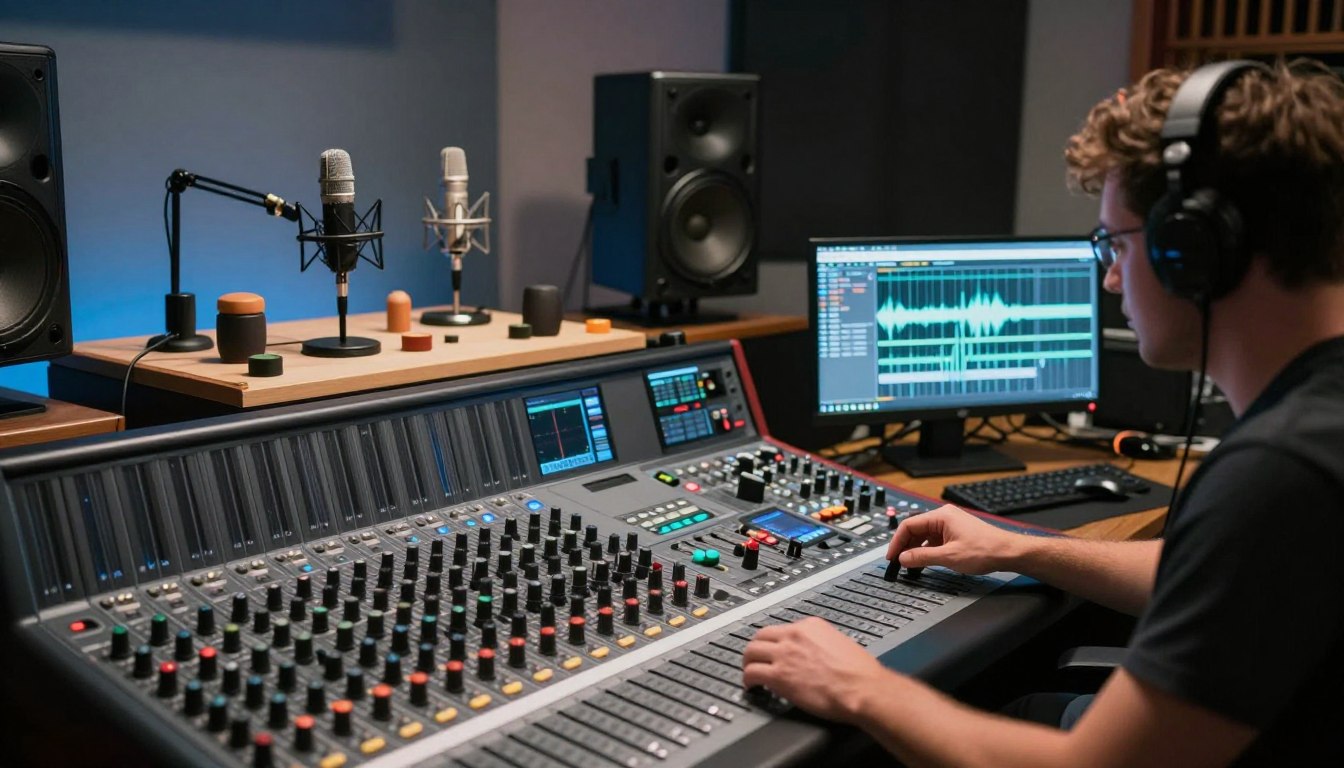
Sound Design: Breathing, Foley & Ambient Layers
Ever felt like some videos are missing something, even if they look great? The answer might be in what you hear, not see. Great audio is like invisible glue that ties your story together.
Learning cinematic sound design can turn flat footage into something truly immersive. It’s not just about turning up the volume. It’s about creating a world that feels real to your viewers.
To create a professional sound, you need to balance breathing, crisp foley, and rich ambient layers. Many creators focus on visuals, but audio is just as important. Whether you’re into ai porn sound design or high-end commercials, the basics of layering are the same. Let’s dive into how to improve your projects with top-notch audio.
Key Takeaways
- Audio is the primary driver of emotional engagement in digital content.
- Layering foley and ambient tracks creates a sense of physical space.
- Breathing patterns add human realism to your character performances.
- Professional audio production is as vital as high-quality visual grading.
- Intentional choices in your mix define your unique creative identity.
Setting Up Your Audio Workspace for Immersive Audio
A well-organized audio workspace is key for capturing the depth and detail your listeners expect. Building a professional environment means every sound detail is preserved. This lets you focus on creativity, not technical issues.
Selecting the Right Digital Audio Workstation
Your Digital Audio Workstation (DAW) is the heart of your production. The right software depends on your workflow and project complexity. Standards like Ableton Live, Pro Tools, or Reaper are great for managing complex sessions.
Look for a DAW with advanced spatial plugins and efficient automation. These are crucial for creating immersive audio that needs precise sound placement. Learn your software’s shortcuts and features to edit faster.
Essential Hardware for High-Fidelity Recording
The quality of your recordings starts with your hardware. A condenser microphone is best for capturing fine details due to its sensitivity. But, a dynamic microphone is better for noisy spaces, offering a more focused sound.
Match your microphone with a top-notch audio interface that has low-noise preamps. This keeps your signal clean. Reliable cables and a sturdy microphone stand also help avoid mechanical noise.
Optimizing Your Environment for Noise Reduction
Even the best gear can’t fix a bad recording environment. Use acoustic panels or heavy curtains to reduce reflections and standing waves. Also, get rid of ambient noise like computer fans or street sounds.
Always check your levels to keep your project consistent. Stick to loudness targets like -14 LUFS for balanced playback. By controlling your environment and signal chain, you ensure high-fidelity production.
Mastering the Art of Breathing Techniques
Breathing is key to any great audio experience. It makes your listener feel right there with you. Capturing the rhythm of a breath can tell a powerful story. It’s all about finding the right mix of skill and genuine emotion.
Recording Natural Breath Patterns
To get a real sound, don’t overdirect the performer. Let them breathe naturally. This lets the involuntary nature of respiration set the pace. If they feel awkward, the sound will be off.
Place your mic a bit off-center to avoid harsh sounds. Use a top-notch condenser mic in a quiet spot. This way, every subtle gasp and soft breath is clear. Keep the setting calm to keep the breathing natural.
Processing Breath for Intimacy and Depth
After recording, it’s time to enhance the sound. Start by applying a gentle high-pass filter. This removes unwanted low-end rumble. You want the listener to feel like the breath is right next to them.
Then, use a bit of compression to balance the breath’s volume. This makes the quieter parts stand out. A touch of saturation adds warmth, making the sound feel more real.
Layering Breath to Build Tension
Layering lets you control the scene’s emotional feel. Begin with a calm breathing base layer. As tension grows, add layers of faster or more shallow breaths to show the character’s feelings.
Use panning to move sounds around the listener. Automate volume and frequency to pace the story. Remember, silence between sounds is just as crucial for impact.
Developing a Foley Library for NSFW Content
Building a foley library lets you capture the exact textures needed for top-notch sound design nsfw projects. Using generic sounds can make your work feel lacking. By creating your own library, you control the sound of your story.
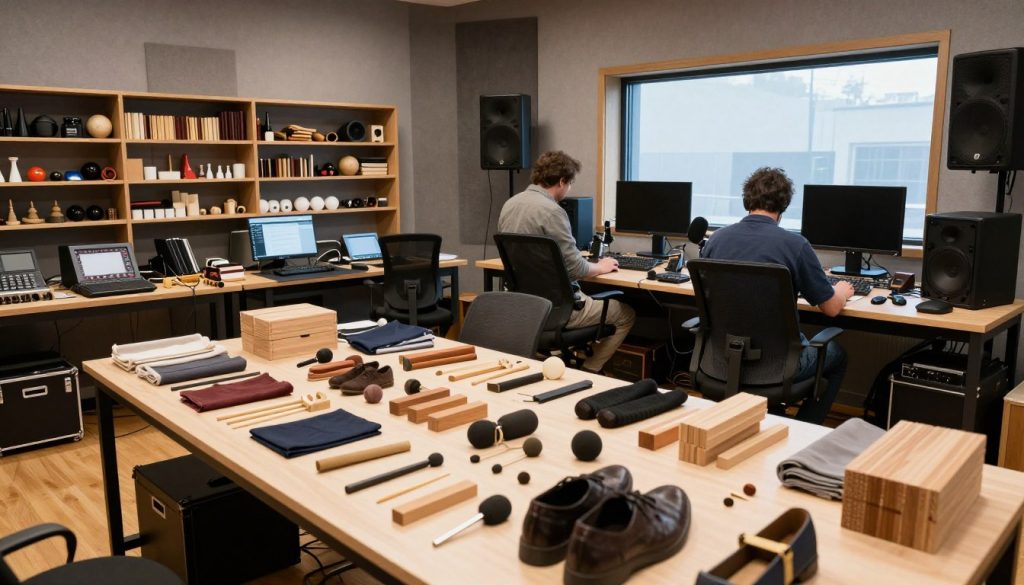
Sourcing Organic Materials for Realistic Textures
You don’t need a fancy studio to find great sounds. Often, the best sounds are right in your home. Look for things with unique textures, like friction or moisture.
- Fabrics: Silk, leather, and denim make different rubbing sounds.
- Liquids: Water, oils, and gels are key for organic movement.
- Surfaces: Wood, glass, and metal have different sounds.
“The secret to great foley is not the gear you use, but the curiosity you bring to the objects around you.”
Recording Techniques for Close-Proximity Sounds
To capture intimate details, change how you record. Get your mic close to the sound source. This reduces echoes and keeps the sound clear. Use a sensitive condenser mic for the fine details of skin or fabric.
Keep an eye on your levels to avoid distortion. Gain staging is key for a clean signal. Try different mic settings to capture the sound’s space.
Organizing Your Foley Samples for Efficient Workflow
A big collection of sounds is useless if you can’t find what you need. Use a clear naming convention to save time. Include what the sound is, what it’s doing, and how loud it is.
Organize your sounds by type, not by when you recorded them. This makes your sound design nsfw work smoother. Finding the right sound quickly lets you focus on creating, not searching.
Implementing AI Porn Sound Design Workflows
Mastering a sound design workflow means using new tech wisely. Machine learning tools can automate tasks, freeing you to focus on creative details.
Integrating AI-Generated Audio with Manual Foley
The best ai porn sound design mixes AI and manual work. AI can create base layers or textures that take hours to make by hand.
After getting your AI base, add your own foley recordings. This mix gives your work a unique, high-quality feel that AI alone can’t match.
“Technology is best when it brings people together and enhances the creative process rather than replacing the human touch.”
Refining AI Outputs for Human-Like Realism
AI audio can sound too cold or robotic for intimate scenes. To make it sound more human, you need to tweak it with EQ and saturation plugins.
Also, adjust the timing and pitch of AI clips for a pro sound design workflow. Small changes in volume and frequency can make AI sound more natural.
Balancing Synthetic and Organic Sound Elements
Getting the right mix of digital and physical sounds is crucial. Too much AI can make scenes feel empty, while too much organic might slow production.
Try to make organic sounds the emotional heart of your work. Use ai porn sound design to add depth and make the scene feel real.
Layering Ambient Textures to Enhance Immersion
Ambient layers are like the invisible foundation that makes a recording come alive. They act as the essential glue that holds your sound world together. By choosing the right background elements, you can create a deep audio immersion that keeps your audience engaged.
Creating Dynamic Background Soundscapes
A static background track can feel artificial and lose its impact quickly. To achieve a professional sound, build soundscapes that grow with your story. Think of your background audio as a living thing that reacts to what’s happening on screen.
Make subtle changes in frequency and volume to keep the listener interested. When you master cinematic sound design, your audience will feel the atmosphere of the space without noticing the background.
“Sound is the invisible architecture of a film, shaping the way we perceive space and emotion long before we see the image.”
Using Room Tone to Establish Spatial Context
Many amateur productions have “dead air,” which can be jarring. Room tone helps establish where you are, whether it’s a small office or a big hall. This constant noise provides a consistent spatial anchor for your other sounds.
Always use specific room tones that match your environment. Even if it’s barely audible, it keeps the audio from feeling like it’s floating. Proper use of these ambient layers makes every sound effect feel real.
Automating Ambient Shifts to Match Narrative Pacing
Static audio rarely matches the emotional intensity of a story. Automating your ambient shifts ensures the background audio matches your content’s pacing. Use automation to adjust the density of your soundscape during tense moments or quiet scenes.
This technique guides the listener’s focus without them realizing it. When your background audio breathes with the story, you reach a higher level of cinematic sound design. Paying attention to these shifts is key to high-quality audio immersion.
Advanced Editing Techniques for Seamless Transitions
To make your audio projects feel like a movie, you need to master certain audio editing techniques. When you mix different sounds, aim for a smooth flow that keeps listeners interested. A great final product comes from how well you connect your audio clips.
Utilizing Crossfades for Fluid Audio Movement
Crossfades are key for avoiding sudden jumps between audio files. They blend the end of one clip with the start of another, avoiding clicks or pops. Try out different fade shapes to match your story’s pace.
- Linear fades: Good for simple transitions needing a steady change.
- Equal power fades: Great for blending music or ambient sounds without volume drops.
- S-curve fades: Ideal for smooth dialogue or breath transitions.
Managing Phase Alignment in Multi-Layered Tracks
When working with multiple audio layers, phase cancellation can be a problem. This occurs when waveforms of similar sounds are out of sync, making them sound weak. To keep your audio clear, align your tracks perfectly.
Zoom in on your timeline to check your waveforms’ peaks and troughs. If waves are inverted, use a phase-invert tool to correct them. This simple trick helps keep your low-end frequencies strong and clear.
Applying Dynamic Processing to Maintain Consistent Volume
Keeping your audio at a steady volume is crucial for a professional sound. If the volume changes too much, listeners might miss details or get overwhelmed. Dynamic processing helps even out these changes.
Compression is your main tool for controlling volume. By setting a threshold, you can reduce loud parts while keeping quiet ones clear. Consistency is key to keeping your audience engaged with the story, not adjusting the volume.
Applying Spatial Audio and Panning Strategies
Spatial audio makes your soundscape feel alive and interactive. It goes beyond a simple stereo mix. This way, you can create a three-dimensional environment that draws listeners into the story.
Creating a Three-Dimensional Sound Stage
To make a believable sound stage, think about distance and depth. Use reverb settings that fit the scene to make sounds feel real. When a character moves away, the sound should fade into the background.
Adjusting sound levels based on distance helps too. Sounds near the listener should be clear and sharp. Distant sounds should be muffled. This depth perception is key for a top-notch mix.
Using Panning to Direct Listener Focus
Panning helps guide the listener’s attention. By moving sound effects with the action on screen, you link the audio and visuals. This creates a dynamic connection between what’s seen and heard.
Steer clear of static panning, which can make your mix feel dull. Instead, use gentle, continuous movement. This keeps the soundscape natural and engaging. Aligning panning with visuals enhances the immersive audio experience.
Implementing Binaural Effects for Heightened Realism
Binaural effects offer a unique realism for headphone users. They mimic how our ears pick up sound from different angles. By using Head-Related Transfer Functions (HRTF), you make sounds seem like they’re right there in the room.
These advanced tools create a truly intimate experience that stereo can’t match. Always check your binaural mix on good headphones. This ensures your project shines with a three-dimensional quality.
Mixing and Mastering for High-Impact Audio
After you’ve set up your creative layers, the final touches make your project shine. This is where audio mixing turns separate tracks into a single, powerful sound. It’s all about making sure every sound hits home with your audience.
Balancing Frequency Spectrums for Clarity
To get a top-notch sound, you need to balance the frequencies. Use an equalizer to make sure dialogue stands out from background sounds. Clarity is key to avoid a messy mix.
- Cut low-end rumble from non-bass elements to clear up the mix.
- Boost high-mid frequencies slightly to enhance vocal presence.
- Use a spectrum analyzer to identify and fix frequency masking issues.
Applying Compression to Glue Your Layers Together
Compression is the magic that ties your sound together. By adding a bit of compression to your master bus, you blend your layers seamlessly. This helps keep the loud and soft parts of your mix in balance.
Don’t overdo it with compression, as it can flatten your sound. Aim for a gentle touch that keeps the energy flowing. Consistency is what keeps your listeners engaged from start to finish.
Final Export Settings for Optimal Playback Quality
Your export settings are crucial for how your audio sounds on different devices. When you’re done with audio mastering, go for high-resolution formats to keep your sound true. This ensures your project sounds great on everything from studio headphones to mobile speakers.
Here are the key settings to consider for your final export:
- Sample Rate: 48kHz is the standard for video projects.
- Bit Depth: 24-bit is the sweet spot for quality and size.
- File Format: WAV or AIFF are best for lossless playback.
Troubleshooting Common Sound Design Challenges
Mastering sound design is not just about creativity. It also needs technical skill. Even pros face technical problems that can mess up your project. Good sound design troubleshooting keeps your work polished and professional.
Eliminating Unwanted Artifacts and Hiss
Background noise and hiss can ruin recordings, especially with high-gain mics. Use noise reduction plugins or spectral repair tools to get rid of these issues. Gating is key to silence tracks during quiet parts, stopping ambient noise from getting in.
Always check your gain staging before recording. This helps avoid needing to overprocess later. For sound design nsfw, keeping the signal clean is crucial. A hiss-free track lets listeners focus on the audio.
Fixing Timing Issues Between Foley and Visuals
Syncing foley with visuals is essential for realism. Even a tiny delay can break the illusion. Zoom in on your timeline to match the transients of your foley with the visuals.
If your audio drifts, check your sample rate settings. Mismatched rates can cause timing problems. Manual alignment is the best way to sync complex scenes perfectly.
Solving Phase Cancellation Problems
Phase cancellation happens when audio signals are out of sync. This makes some frequencies disappear or sound thin. Flipping the polarity on one track in your DAW can often fix this.
Always check your mix in mono to spot phase issues. If it sounds thin or “hollows out” in mono, you have a problem. Fixing these issues early keeps your sound design nsfw consistent on all devices.
| Issue | Primary Cause | Recommended Fix |
|---|---|---|
| Audible Hiss | High Noise Floor | Apply Noise Gate or Spectral Repair |
| Sync Drift | Sample Rate Mismatch | Align Transients Manually |
| Thin Sound | Phase Cancellation | Invert Polarity on One Track |
| Digital Clipping | Excessive Gain | Lower Input Levels or Limiters |
Conclusion
Mastering sound design turns a regular production into a real experience. You now have the skills to create detailed soundscapes. These soundscapes draw your audience into the story.
Good audio work is often unseen by the listener. It acts as a silent guide, setting the mood of each scene. By mixing natural sounds with precise placement, you add a professional touch that stands out.
Try new things with your creative voice using Avid Pro Tools or Ableton Live. Expand your Foley library and improve your mixing skills. This way, every sound layer supports the story. Regular practice makes these skills second nature.
Your audio production journey keeps growing with each project. Use these tips in your next session to see how sound design changes how people see your work. Begin crafting your unique sound today.
FAQ
Why should I prioritize immersive audio over simple stereo tracks in my digital content?
Immersive audio turns a flat screen into a world that grabs your attention. It uses special recording and sound layering to make you feel like you’re right there. This is key for keeping viewers engaged and feeling the story deeply.
Which microphone should I choose for high-fidelity sound design nsfw projects?
Choose based on your recording spot. For close sounds, like in sound design nsfw foley, a condenser mic like the Rode NT1 works great. It picks up fine details well. For noisy places, a dynamic mic like the Shure SM7B is better. It blocks out background noise but keeps the sound warm.
What are the industry-standard loudness targets I should aim for during mastering?
For audio that sounds right on all platforms, aim for -14 LUFS. YouTube, Spotify, and Tidal use this level. Sticking to it stops platforms from messing with your sound too much, keeping it clear and full.
How can I make AI-generated audio sound more realistic in my workflow?
AI tools like ElevenLabs or Adobe Podcast are great starts. But, they can sound too perfect. Mix them with real sounds you’ve recorded. Adding in real breathing and movement sounds makes the AI sound more human and real.
What is the best Digital Audio Workstation (DAW) for complex sound layering?
For complex sound work, Ableton Live and Avid Pro Tools are top choices. Ableton is loved for its easy sound tweaking and “Warp” tools. Pro Tools is the go-to for precise editing and mixing in big studios.
How do I prevent phase cancellation when layering multiple foley and ambient tracks?
Phase cancellation happens when sounds fight each other. Use plugins like Waves InPhase or zoom in on waveforms to line up peaks and troughs. This keeps your sound strong and unified.
What is the purpose of using room tone in my transitions?
Room tone fills the gaps between sounds, making transitions smooth. It’s like the “glue” that keeps your audio world together. It makes sure your audio feels continuous and immersive.
How does compression help “glue” different audio layers together?
Compression brings all parts of your audio closer together. On a bus with multiple layers, it makes them sound like they’re from the same place. A good compressor, like FabFilter Pro-C 2, adds punch and polish to your mix.
Can I create a three-dimensional sound stage using standard headphones?
Yes, you can create a 360-degree sound field with headphones. Use spatial audio and panning to guide the listener’s ears. Plugins like Dear Reality dearVR simulate real room sound, making it feel more real on headphones.
Why is organizing my foley library with consistent naming conventions important?
Being organized is key in sound design. A clear naming system, like [Material]_[Action]_[Microphone], helps you find sounds fast. This is crucial for complex projects where you might need many sounds to match the story.