Input the Vision: Prompt Writing Formula for Neural Ecstasy
Ever felt like your AI talks only one way? It’s like a conversation where you’re always on the receiving end. But what if you could make it a true collaboration?
Discovering a ai prompt formula can change everything. This guide will show you how to take your digital chats to the next level.
Semantic parsing is key to making AI truly get what you mean. By using this input the vision workflow, you can guide AI to create amazing results.
Key Takeaways
- Learn to move beyond basic query-response patterns.
- Master a structured approach to AI communication.
- Understand how to use semantic parsing for better accuracy.
- Transform your relationship with large language models.
- Achieve creative and precise outputs through intentional design.
Understanding the Input the Vision Workflow
Learning the input the vision workflow changes how you see your role as a creator. You should see AI as a partner, not just a tool. This way, your work becomes a continuous conversation.
Defining the Core Concept
The core idea is that ideas don’t exist alone. Jonathan Lethem’s 2007 essay, “The Ecstasy of Influence,” says all ideas are part of a shared culture. Every prompt you make is influenced by history and other people’s words.
“The world is a vast, interconnected web of ideas where every new creation is a remix of what came before.”
Understanding this lets you work better with AI. You stop trying to make it original and focus on combining existing knowledge. This is the essence of the input the vision workflow.
Why Vision-Based Prompting Changes Everything
Seeing authorship differently is key for modern prompt engineering. By working like a curator, your work gets better. You move from strict instructions to a more flexible, collaborative intelligence.
This change makes working with AI easier. You’re not just typing; you’re guiding a vision. The table below shows how this new approach differs from old methods.
| Feature | Traditional Prompting | Input the Vision Workflow |
|---|---|---|
| Primary Goal | Task Completion | Collaborative Synthesis |
| AI Role | Service Tool | Creative Partner |
| Output Quality | Literal Interpretation | Context-Aware Nuance |
| User Mindset | Command-Line | Visionary Curator |
Preparing Your Mental Canvas for AI Interaction
Success in AI interaction starts long before you hit the enter key. Many users jump straight into typing, only to receive disjointed or irrelevant responses. These responses fail to meet their needs. By organizing your thoughts first, you create a structured environment for the model to shine.
This preparation phase ensures your instructions are grounded in reality. It helps avoid vague, abstract desires. Treating your prompt as a professional project boosts the quality of the output you receive.
Setting Clear Intentions Before You Type
Before you start, define what you want to achieve. Think about what the final result should look like and who it’s for. Clarity of purpose guides the AI toward the most relevant information.
If your intentions are fuzzy, the AI might use generic data. Write down your primary goal in one sentence to stay focused. This habit helps avoid going off topic during generation.
Gathering Contextual Data Points
After setting your intentions, gather the necessary background information. Think of this as providing the raw materials for the AI to work with. Without specific data points, the model might use broad patterns that don’t fit your situation.
Organizing your facts, constraints, and specific examples beforehand helps. This proactive approach ensures the AI understands your project’s boundaries. The table below shows the difference between a reactive and prepared approach.
| Feature | Unprepared Prompting | Prepared Prompting |
|---|---|---|
| Goal Definition | Vague or absent | Specific and measurable |
| Data Usage | Assumed by the AI | Provided by the user |
| Output Quality | Generic and inconsistent | Highly relevant and accurate |
| Time Investment | Low initial, high rework | High initial, low rework |
The Core Components of the Prompt Writing Formula
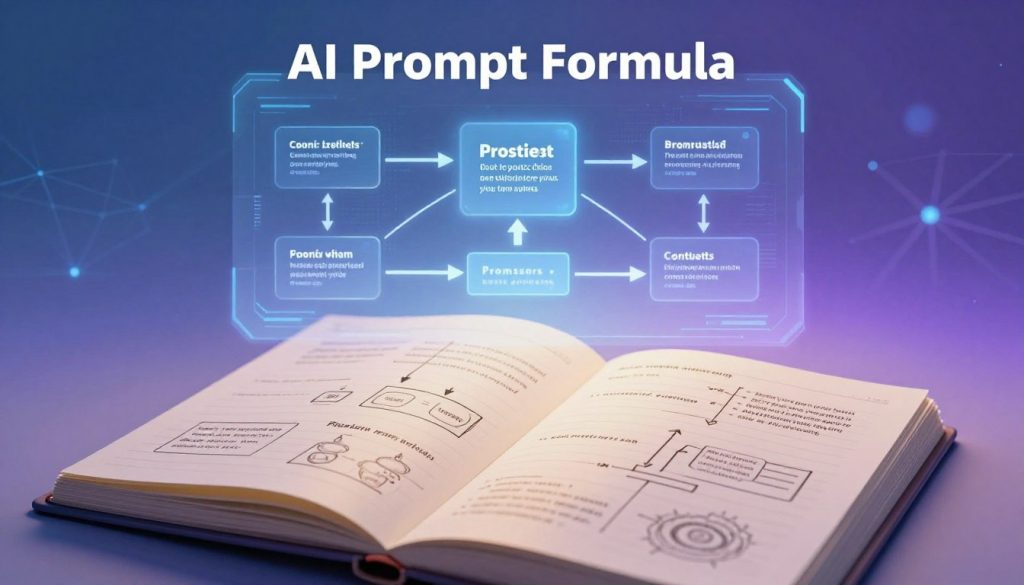
A strong ai prompt formula connects your ideas to top-notch machine content. It breaks down your instructions into clear parts. This lets you control the creative process better.
Defining the Role and Persona
Choosing a persona for the AI is the first step in your ai prompt formula. By telling the model to be a senior software engineer or a creative marketing strategist, you focus its vast data. This helps it understand your specific needs.
When the AI knows its role, its output gets much better. It uses the right words and tone for that job.
Establishing Constraints and Parameters
Setting clear limits is key to quality results. Parameters keep the model on track with your project’s needs. This stops it from going off on tangents.
You can set word limits, banned words, or specific steps. These guardrails help the AI follow your instructions well. They also cut down on mistakes or unrelated answers.
Structuring the Output Format
A clear output format ensures your content looks the same every time. Whether it’s a list, a JSON object, or a report, telling the AI what you need helps. This way, it doesn’t pick a format that doesn’t fit your needs.
Mastering these three areas lets you fine-tune your ai prompt formula for top results. The table below shows how these parts work together to improve your AI interactions.
| Component | Primary Function | Expected Benefit |
|---|---|---|
| Persona | Assigns expertise | Improved domain accuracy |
| Constraints | Sets boundaries | Reduced irrelevant content |
| Output Format | Defines structure | Enhanced consistency |
Mastering Semantic Parsing for Precise Outputs
Semantic parsing is key to making your ideas clear to machines. It helps the AI understand what you mean. This way, you can turn vague ideas into clear data for the model.
How AI Interprets Your Linguistic Structure
When you give a prompt, the AI breaks it down into parts. It looks for patterns to understand your intent. If your text is disorganized, the AI might get confused.
By organizing your thoughts, you help the AI focus on what’s important. This semantic parsing ensures the model stays on track. Clear structure leads to better results.
Reducing Ambiguity in Your Instructions
Ambiguity can lead to AI mistakes. If your instructions are unclear, the AI might not do what you want. You need to be clear about your goals.
Use specific words and avoid vague terms. Clear instructions keep the AI on the right path. This makes the output better.
Techniques for Logical Sequencing
Logical sequencing means arranging your instructions in a logical order. Start with the main goal, then add details, and end with what you want to see. This helps the AI stay focused.
Good semantic parsing follows this order. It guides the AI from start to finish. This is crucial for complex tasks that need precision.
Step-by-Step Execution of the Input the Vision Workflow
Mastering the input the vision workflow needs a structured approach. By dividing your work into clear stages, you make sure the AI follows your exact plan. This method keeps you in control of your projects from start to end.
Phase One: Initial Concept Mapping
Start by outlining your main ideas before typing anything. This is like creating the basic structure of your project. Identify the main themes, tone, and specific elements you want to keep or change.
For example, Venkatesh Rao transformed Lovecraft’s “The Shadow Over Innsmouth” into a transhumanist horror story. He first mapped out the key story points. He figured out which parts of the original story would work well in a tech setting. This step is crucial for a successful input the vision workflow.
Phase Two: Drafting the Primary Prompt
With your map in hand, start writing the main prompt. This is where you turn your ideas into clear instructions for the AI. Define the character, set limits, and say what kind of output you want.
Be clear and specific to avoid confusion. Giving the AI a clear role helps it stay on track with your goals. Strong prompts guide the AI’s creative process, keeping it focused on your vision.
Phase Three: Reviewing Against the Vision
The last step is to check the AI’s output against your original idea. Look for any differences. If it’s off, refine your instructions to better match your concept.
This back-and-forth is key to the input the vision workflow. By regularly checking your work, you turn the AI into a valuable partner. Use the table below to track your progress through these important steps.
| Phase | Primary Goal | Key Action |
|---|---|---|
| Concept Mapping | Define Scope | Outline narrative beats |
| Drafting | Set Parameters | Write structured instructions |
| Reviewing | Ensure Alignment | Verify against original vision |
Refining Your Prompts Through Iterative Feedback
Improving your ai prompt formula is key to getting great results. Don’t expect it to be perfect right away. See each interaction as a chance to learn and improve.
By treating each response as a clue, you can make your instructions better. This way, you’ll get better results next time.
Analyzing AI Responses for Gaps
When you check an output, look for what’s missing. Maybe the tone is wrong or the content is too shallow. Finding these gaps is the first step to better communication with the AI.
Look out for these signs you need to change your instructions:
- The output ignores specific constraints you established.
- The language style does not match your target audience.
- The response provides generic information instead of deep, contextual insights.
- The structure of the content fails to meet your formatting requirements.
Adjusting Variables for Better Alignment
After spotting the gaps, tweak your variables to get closer to your goal. You might change the persona, tighten the rules, or give more examples. Even small tweaks can make a big difference.
Try different words or add more context to see how the AI responds. If it’s still off, break your instructions into smaller steps. This way, your ai prompt formula will keep getting better, giving you accurate and relevant content every time.
Advanced Techniques for Achieving Neural Ecstasy
To get the most out of your AI assistant, move beyond simple questions. Use complex instructions that challenge the AI. This way, you can have a more meaningful interaction, treating the AI as a partner rather than just a tool.
Layering Complex Instructions
For better results, break down your requests into layers. Instead of one big command, divide it into parts. This helps the AI handle many things at once, making your output more detailed and refined.
Layering your instructions gives the AI a clear plan. Start with the main goal, then add details like tone and audience. This keeps the AI focused on your vision, avoiding generic answers.
Utilizing Chain-of-Thought Prompting
Ask the AI to explain its thought process. This method, called chain-of-thought prompting, helps the AI solve problems step by step. It cuts down on mistakes and shows you how the AI thinks.
This is great for tasks that need careful thinking or creative ideas. When the AI shares its logic, you can see where to tweak your prompts. It makes the AI more transparent and collaborative.
| Prompting Strategy | Primary Benefit | Best Use Case |
|---|---|---|
| Basic Querying | Speed and simplicity | Quick facts or simple summaries |
| Layered Instructions | High precision and control | Complex content creation |
| Chain-of-Thought | Improved logical accuracy | Problem-solving and analysis |
Common Pitfalls and How to Avoid Them
Learning to avoid mistakes is key to mastering prompts. Modern language models are like advanced social media tools. They understand your language based on social connections and past knowledge. This makes them very sensitive to what you say.
When your instructions are unclear, the model may not get it right. It’s important to plan your prompts carefully. This way, your ideas stay clear and focused.
Overloading the AI with Conflicting Data
One big mistake is giving the AI too much conflicting information at once. When you ask for different things in one go, the model often gives a general answer. This makes the output less clear and misses your point.
To avoid this, check your instructions for any confusion before sending them. If you have many things to ask for, list them in order. This helps the model stay focused on what you really want.
The Danger of Vague Descriptors
Using vague words like “good” or “fast” is another common mistake. These words mean different things to different people. Without clear details, the AI guesses what you mean based on its own training.
For better results, use specific and measurable words. Instead of asking for something “professional,” tell the AI who it’s for, what level it should be, and what format you need. This way, you guide the AI to give you exactly what you want.
Integrating Visual Thinking into Textual Prompts
Adding visual thinking to your prompts helps AI give better answers. By using detailed images instead of simple commands, you give the model a clear guide. This method is key for creative projects where the mood and feel are crucial.

Translating Imagery into Descriptive Language
To get the best results, turn your mental pictures into clear, written words. Instead of asking for a “cozy room,” describe what makes it cozy. You might talk about the soft glow of a fireplace, the feel of a velvet armchair, or the light through dusty windows.
Breaking down your vision into basic parts is important. Defining the lighting, colors, and layout helps avoid mistakes. Being precise in your descriptions means the AI can create a story that matches your vision.
Using Sensory Details to Guide the Model
The best prompts use all our senses, not just sight. Adding sensory details helps the model create a vivid and immersive story that readers can feel. You can guide the AI by focusing on these sensory areas:
- Tactile sensations: Describe textures like rough stone, smooth silk, or cold metal.
- Auditory cues: Include sounds such as distant thunder, the hum of machinery, or a soft whisper.
- Olfactory elements: Mention scents like pine needles, rain on pavement, or freshly baked bread.
- Atmospheric pressure: Define the mood through temperature or the feeling of heavy, humid air.
Using these details makes the AI create more detailed content. When you give a rich sensory context, the model’s output feels real and connected. This way, a simple prompt becomes a powerful tool for creativity.
Scaling Your Prompting Skills for Complex Projects
Managing big projects needs more than just creativity. It also needs a clear plan for prompt engineering. As you tackle harder tasks, you must stay organized to keep your work precise. Using semantic parsing helps make sure your instructions are clear and work well at every step.
Managing Multi-Stage Prompting Workflows
Big projects often need many prompts, not just one. Break your big idea into smaller parts to keep the model focused. This modular approach lets you check your work at each step before moving on.
Linking these prompts together makes a strong pipeline. Each step should add to the last, making sure the final product meets your goals. This way, you avoid mistakes and keep your project on course.
Documenting Your Successful Prompt Templates
Being consistent is key for a pro prompt engineer. Keep a collection of your best templates to save time later. By using semantic parsing in your notes, you can easily adjust these templates for new projects.
Keeping your templates organized helps you work faster and improve your skills. Documenting your successes shows you which prompts work best for certain projects. Use the table below to see how different strategies compare.
| Strategy | Complexity Level | Reusability | Precision |
|---|---|---|---|
| Ad-hoc Prompting | Low | Minimal | Variable |
| Modular Workflow | Medium | High | Consistent |
| Template Library | High | Maximum | Superior |
Conclusion
Your journey to neural ecstasy starts with a commitment to learning and improving. Every time you use models like GPT-4 or Claude, you build your creative skills.
You have the power to turn ideas into digital realities. By using the prompt formula and advanced parsing, you can unlock technology’s full potential.
See your AI as a partner in your work. This approach makes your results better and more valuable.
Begin using these strategies now to improve your skills. Your ability to guide AI systems will be key in a world where automation grows.
Share your experiences with these methods. Your feedback helps others learn how humans and machines can work together.
FAQ
What exactly is the “Input the Vision” workflow in modern AI interaction?
This method sees your work with models like OpenAI’s GPT-4 or Anthropic’s Claude as a team effort. It’s based on the idea of the “Lethem Sea,” named after author Jonathan Lethem. He said all text comes from existing cultural references. By seeing yourself as a director, not just an author, you can handle the AI’s output better.
How does the “ai prompt formula” help in achieving high-quality creative outputs?
The ai prompt formula is a guide for your creative ideas. It focuses on three main areas: Role and Persona, Constraints and Parameters, and Output Format. This structured method helps the AI understand your vision, tone, and limits.
What role does semantic parsing play in reducing AI hallucinations or errors?
A: Semantic parsing helps the AI understand your language better. By mastering this, you can avoid ambiguity in your prompts. Clear, logical input leads to precise outputs that meet your expectations.
Can you provide an example of the workflow’s effectiveness in a complex project?
A: Venkatesh Rao is a great example. He used specific prompts to change a H.P. Lovecraft story into a transhumanist tale. By following a three-step process, he kept the story’s essence while making it new.
What is “Neural Ecstasy” and how can I achieve it with advanced prompting?
A: Neural Ecstasy is when AI output is deep and complex. To get there, use layered instructions and chain-of-thought prompting. This makes the AI explain its thought process, leading to more meaningful interactions.
Why is it a mistake to treat Large Language Models (LLMs) like a simple search engine?
LLMs are more like “social media++” because they respond to the context of your words. Users often fail because they give too much conflicting information or vague prompts. It’s key to understand the cultural and social impact of your words.
How do I scale my prompting skills for multi-stage creative workflows?
Scaling up means using multi-stage prompting. Each prompt builds on the last one. By documenting your best prompts and using visual thinking, you can manage long projects well.